

Annie’s Story: Getting Her Childhood Back
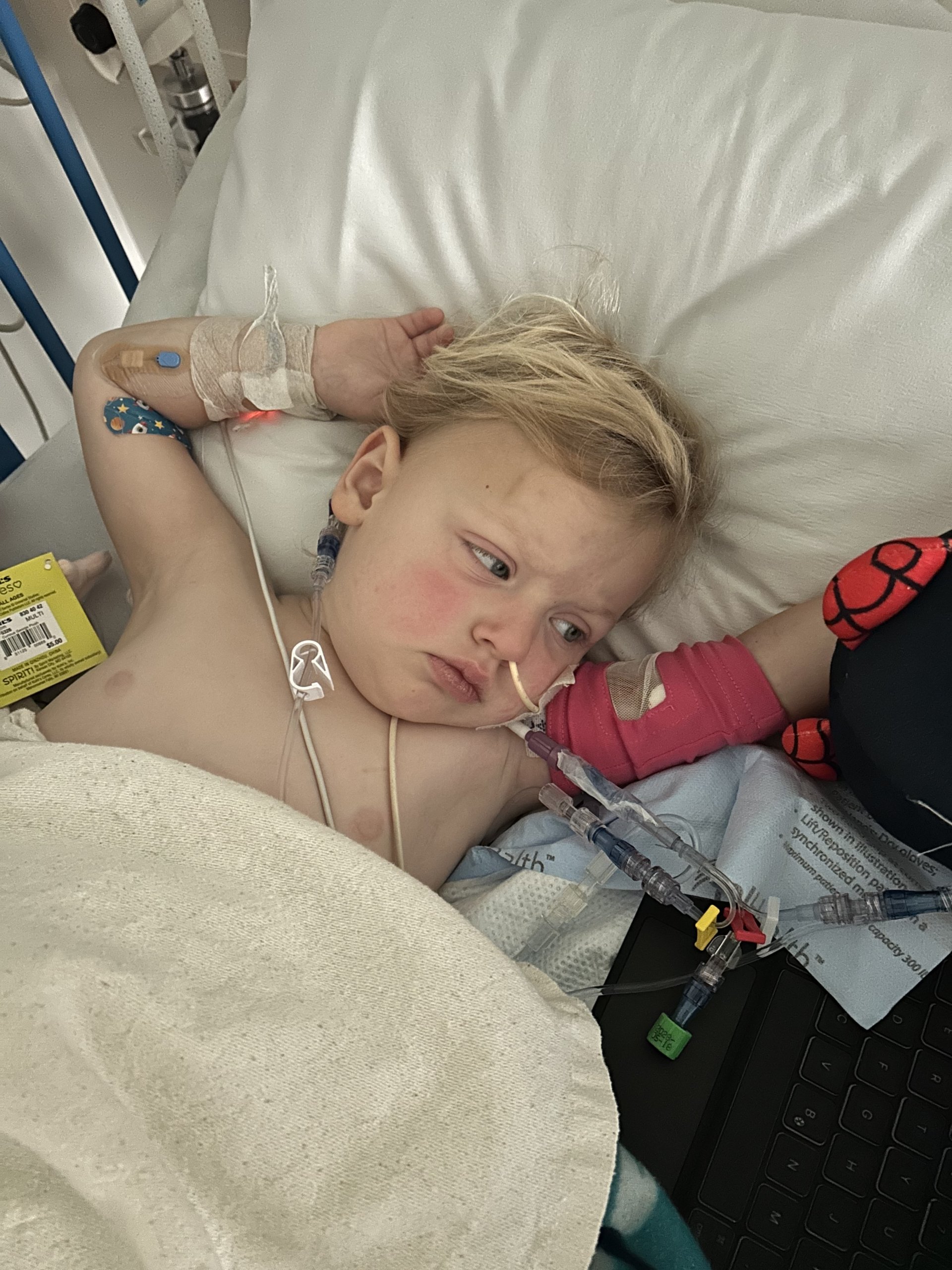
When Annie was diagnosed with pancreatitis in December 2024, she was just two years old.
Looking back, her family believes she had been experiencing symptoms long before that first official diagnosis. At around 18 months old, Annie spent nearly 12 weeks sick, but her symptoms were repeatedly dismissed as “just a virus.” It wasn’t until her family was referred to a pediatric GI clinic that someone finally listened.
Knowing there was a family history of pancreatic disease, Annie’s parents shared their concerns with a nurse practitioner who took them seriously.
Genetic testing revealed two mutations associated with an increased risk of pancreatitis, providing long-awaited answers and leading the family to seek care at Cincinnati Children’s, where Annie’s uncle had been treated for pancreatitis as a child. What followed was a difficult year.
After her first hospitalization, Annie experienced at least six additional episodes of pancreatitis, resulting in numerous hospital stays that stretched across days and weeks. Watching their toddler endure severe pain was heartbreaking. Despite medications and every effort to keep her comfortable, there were moments her parents will never forget, especially hearing Annie ask for heat packs and more pain medicine.
Through it all, the pancreas team at Cincinnati Children’s guided the family every step of the way.
In August 2025, Annie was approved for a Total Pancreatectomy with Islet Autotransplantation (TPIAT). But just weeks before surgery, she suffered her most severe pancreatitis attack yet, forcing the procedure to be postponed. When she became sick again shortly before the rescheduled date, her family feared another delay.
Then came a moment of hope.
When Dr. Gurria arrived to evaluate Annie, she was hanging from her crib “like a monkey.” Seeing her strength and energy, he believed the surgery could still move forward. Two weeks later, Annie underwent TPIAT as planned.
The surgery exceeded everyone’s expectations.
The procedure lasted about eight and a half hours, Annie was able to keep her spleen, and her islet cell yield was exceptionally high. While surgeons described her pancreas as severely damaged, the laboratory team reported that her islet cells were “beautiful.” Just months after surgery, all signs indicate that those islet cells are producing insulin on their own.
For Annie’s family, it feels nothing short of miraculous.

Recovery wasn’t without challenges. Shortly after returning home, Annie required another surgery to correct a bowel obstruction. But once that hurdle was behind her, she began to thrive.
Today, Annie is back where she belongs, at home with her family, especially her beloved older brother, Jack. Affectionately known as “Jack Jack,” he stood by his sister through an incredibly difficult year. At just six years old, he can explain more about the pancreas than many adults.
When Annie’s family reflects on the journey, they remember more than 70 nights spent in the hospital. They remember the compassion of the care teams and the support they received from Ronald McDonald House Charities of Greater Cincinnati, which became a lifeline during extended stays away from home.

Most of all, they appreciate the simple moments that once felt out of reach.
Today, Annie spends her time doing flips at gymnastics, enjoying every bite of macaroni and cheese and French fries, and embracing life as a happy, healthy little girl. She’s funny, kind, resilient, and full of energy.
After a year defined by hospital rooms and uncertainty, Annie has something every child deserves: her childhood back.
